How to Organize a Pantry With Wire Shelves: Practical Fixes for Common Storage Problems
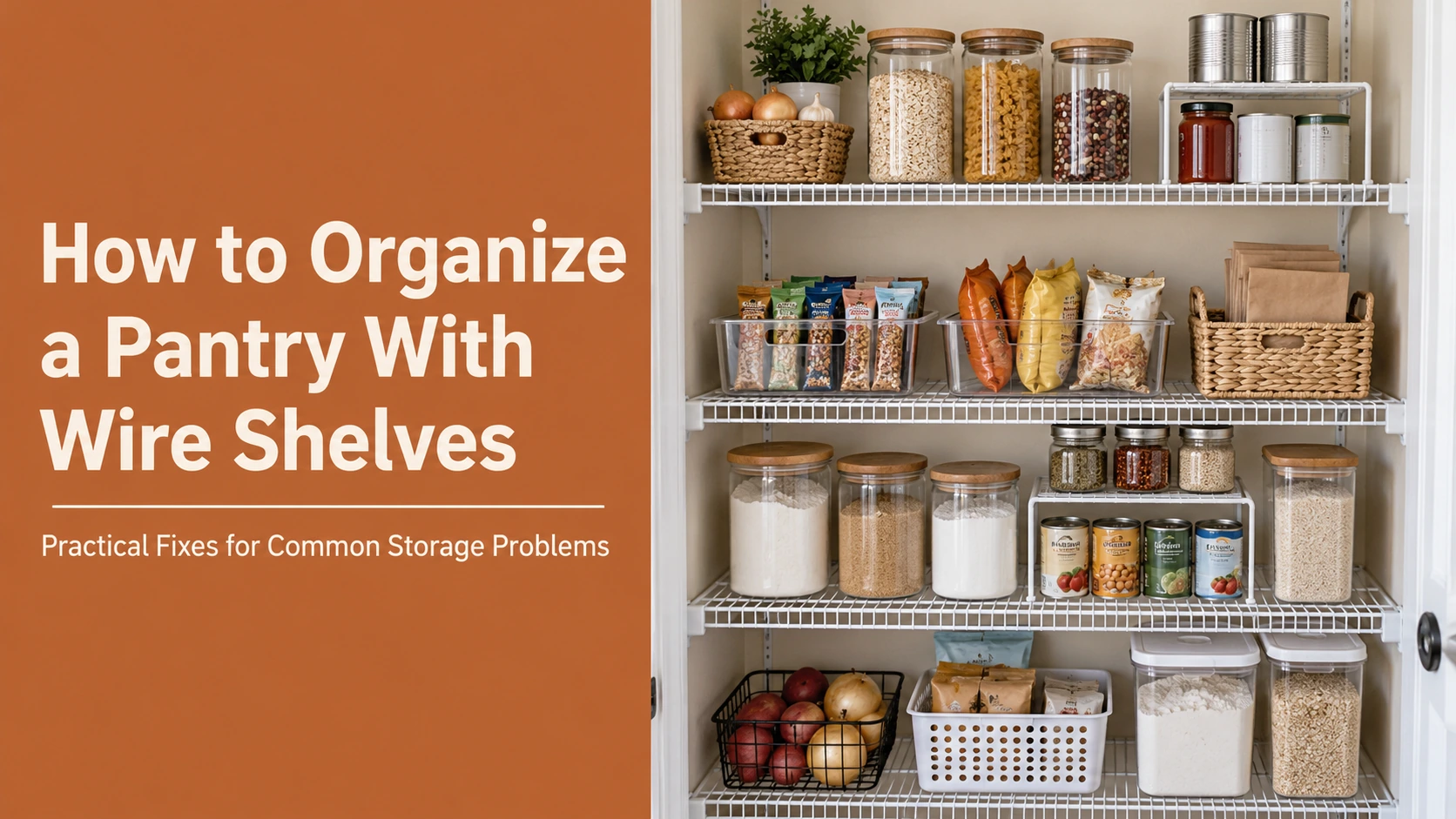
Here’s how to organize a pantry with wire shelves: stabilize small items, group loose packets in shallow bins, and arrange food so you can reach it without unloading the shelf. You can often keep the shelving you have and add an organizer only where a specific problem needs fixing.
Start with the item that gives you the most trouble. A tipping spice jar needs a different solution from a snack bin that catches on the shelf edge. The fixes below help you choose what belongs where before buying a matching set of containers.
Match the fix to the wire-shelf problem
Empty one shelf and sort its contents into everyday food, reserve stock, and items that belong elsewhere. Clean the exposed wires using the shelf manufacturer’s care instructions, then let them dry.
Before putting food back, identify what is actually going wrong.
| Problem | First fix to try | Check before buying |
|---|---|---|
| Small jars tip between wires | A smooth liner designed for wire shelving | It lies flat and supports the jar’s entire base. |
| Packets fall through or spread out | A shallow, solid-bottom bin | Packets stay visible and the filled bin is easy to lift. |
| A bin catches on the front edge | A shorter bin with overhead lifting room | It clears the shelf lip and the shelf above. |
| Cans disappear behind other cans | A stable tiered organizer or separate rows by type | You can remove an item without disturbing the rest. |
| Condiments are hard to reach | A small turntable where it fits | The loaded tray rotates without hitting walls or supports. |
| Shelves sag or pull away from the wall | Unload and address the shelving or installation | Liners and bins cannot repair a structural problem. |
Measure usable shelf width, depth, and clear height. Include diagonal supports, the door opening, and any front lip. Compare these measurements with an organizer’s full outside dimensions, including handles and rims.
Stop jars tipping with the right shelf liner
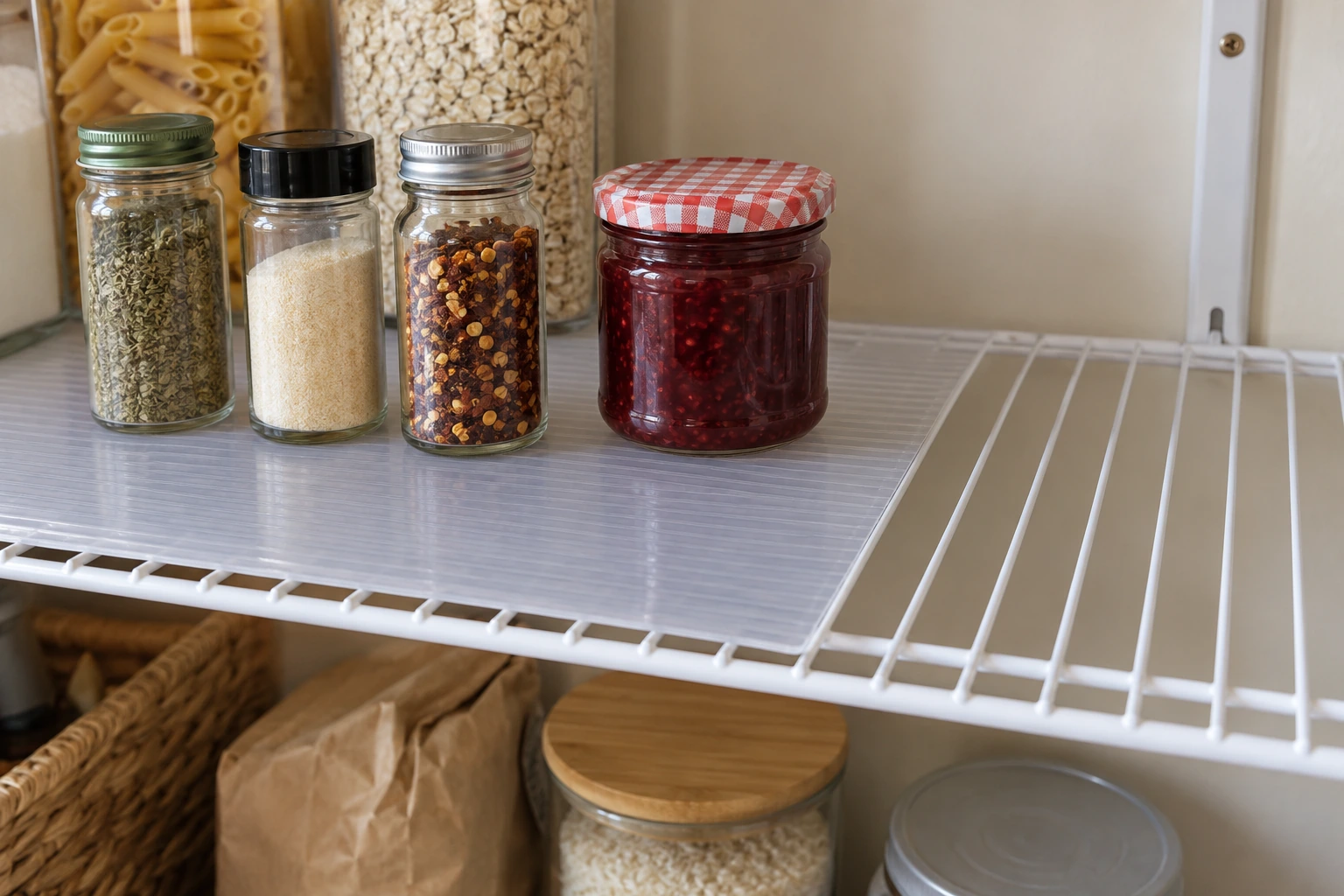
Choose a shelf liner intended to bridge wire gaps. A soft, open-weave drawer liner may grip a surface without providing the firm support a narrow jar needs.
Follow the liner’s fitting instructions. It should lie flat within the shelf footprint, without curled edges or an unsupported overhang. Test it with your smallest jar before covering the rest of the shelf.
You do not need to line every surface. Start beneath spice jars, narrow bottles, or organizers whose bases sit unevenly on the wires. Leave other sections uncovered if their contents already sit securely.
Treat the liner as a surface, not reinforcement
A liner does not increase the shelf’s rated load. Keep following the shelving manufacturer’s installation and loading instructions, and include the weight of containers and organizers when planning storage.
Choose a removable liner so you can lift it and clean spills underneath. Keep packaged food and closed containers on it rather than placing loose food directly on a material whose food-contact suitability you have not confirmed.
Contain packets without making bins hard to remove
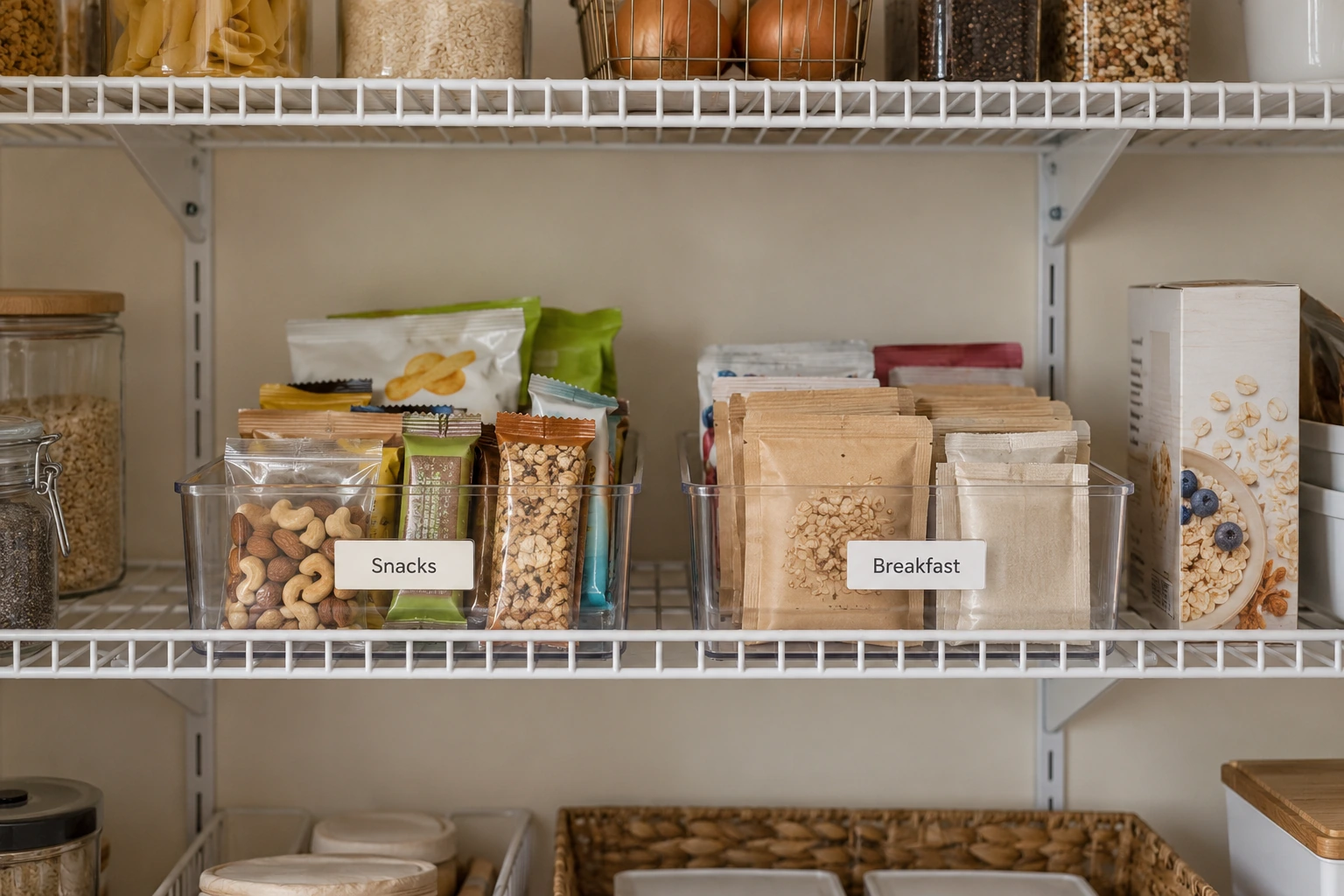
Shallow bins work well for oatmeal sachets, seasoning envelopes, snack bars, and other small packages. Stand packets upright so you can identify and remove one without digging through a pile.
Look for a broad, flat base that rests securely on the shelf. If molded feet or ridges sit awkwardly between wires, choose a different bin or a compatible supporting liner.
Check the front lip before treating a bin like a drawer
Some wire shelves have an upward retaining edge. A loose bin behind that edge must be lifted before it can be removed. A handle alone does not make it a pull-out drawer.
Test one bin with a typical load. Lift it over the lip, bring it through the doorway, and return it. If that requires tilting packets out or scraping the shelf above, use a shorter bin or another shelf position.
Keep categories broad enough to survive a normal grocery trip. “Breakfast” or “Snacks” may be more useful than a separate container for every flavor. Leave enough room to retrieve packets without emptying the bin.
Make food at the back visible and reachable
Deep shelves need a retrieval plan. Putting a small item behind a large box still leaves it hidden, even when everything is neatly arranged.
Choose a riser, turntable, or bin for its movement
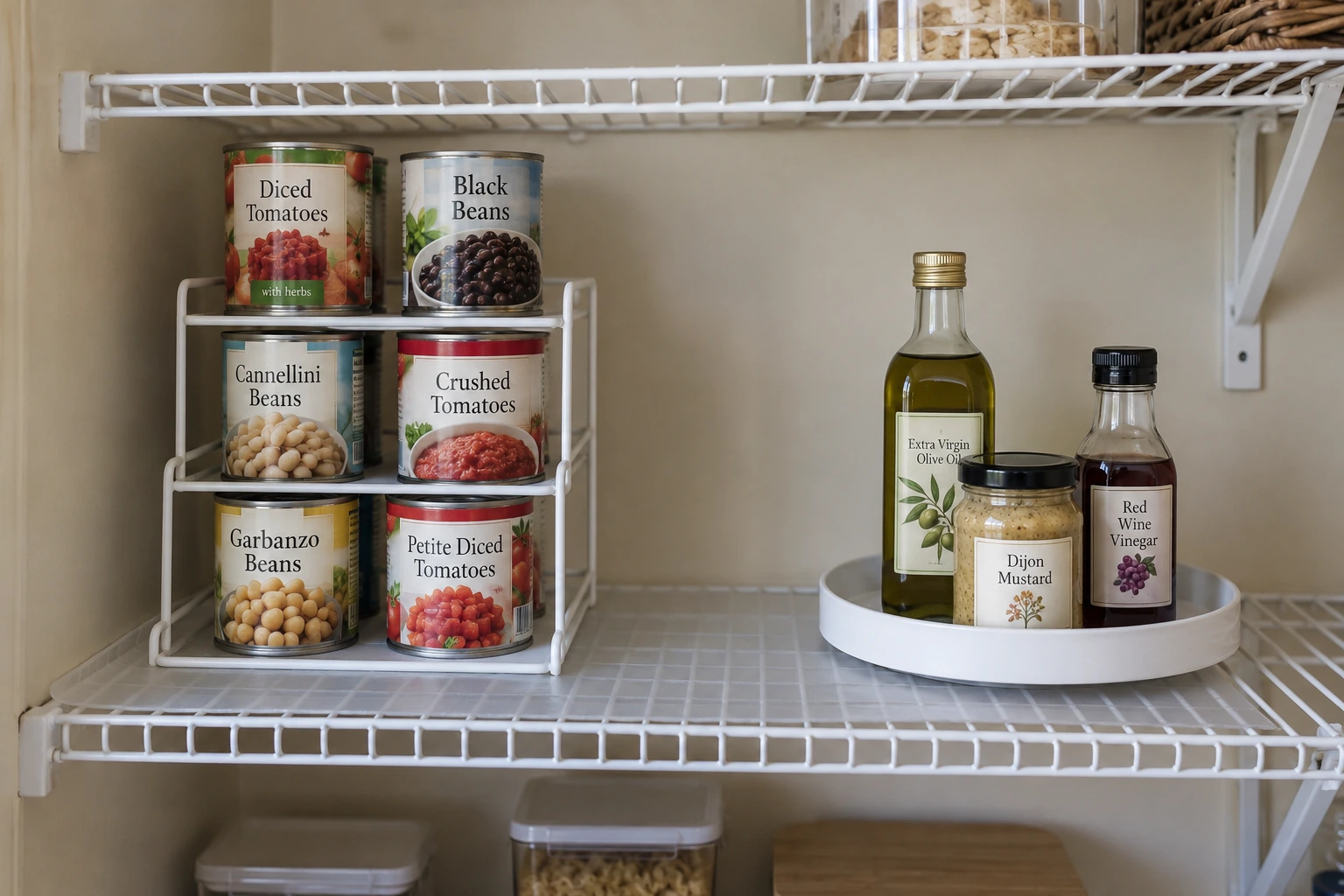
Use a tiered can organizer when it makes labels easier to see and leaves enough overhead space to remove each can. Check that its base or feet are supported securely. A narrow foot resting in a wire gap can make the whole organizer unstable.
A turntable can suit small bottles and jars, particularly where you otherwise reach around a front row. Check the full circle with the pantry door in its normal open position. Tall bottles must clear the shelf above, and nothing should strike a wall or bracket as the tray turns.
For packets stored toward the back, a removable bin may be simpler. Keep it light enough to lift and leave its retrieval path clear. Reserve stock can sit behind the matching active product, provided you can still check what you own.
Give everyday food the easiest shelf positions
Arrange the pantry around the people using it. Put frequently used food where they can see, take, and return it comfortably. Store heavier containers where they can be handled with control, rather than automatically putting all reserve stock on the top shelf.
A practical wire shelf pantry organization plan might group breakfast foods together, place cooking staples beside one another, and give baking supplies their own section. Each category can share a shelf with another. It does not need a dedicated basket.
Keep original packaging when it already stores well. Decant only when a container solves a handling or storage problem, and retain cooking directions, ingredient information, and relevant dates.
If you need additional storage outside the pantry, these small-space organization tips cover options such as door storage. Before adding a pantry-door rack, check its mounting requirements and confirm that its contents clear the shelf fronts when the door closes.
Replace shelving only when the existing setup cannot do the job
If organizing a pantry with wire shelves still leaves you with unusable spacing or insufficient room, consider whether the shelving itself needs changing. Loose hardware, damaged wires, or sagging shelves need attention before you add more food.
For replacement or additional storage, browse Amechef’s shelving options for an organized pantry and compare individual product dimensions, shelf spacing, and installation requirements with your space before ordering. Check whether load ratings apply per shelf or to the whole unit, and whether the stated configuration matches how you intend to use it.
Keep the choice tied to the problem. A deeper rack is not useful if it blocks the door or puts more food beyond your reach.
Check the arrangement after your next grocery trip
Restock the pantry before deciding whether the new arrangement works. Move older matching stock forward, place new purchases behind it, and check whether everything still fits without crowding.
Try removing a jar, lifting a full snack bin, and reaching a back-row item. If you repeatedly move unrelated food to get what you need, change that shelf’s arrangement. Keep the fixes that make everyday use easier, and skip accessories that only make the pantry look fuller.